
A well-planned grocery list can make balanced eating with insulin resistance simpler, less expensive, and easier to repeat. You do not need specialty “diabetic” products or a strict food list. Focus on vegetables, whole fruit, protein foods, beans, whole grains, and unsweetened basics that can be combined into meals and snacks.
This practical insulin resistance grocery list is designed around foods commonly available in U.S. supermarkets. Use it as a flexible starting point for one person or a household, and adjust quantities to your budget, preferences, and meal plan. No food list can treat insulin resistance on its own, and individual needs vary.
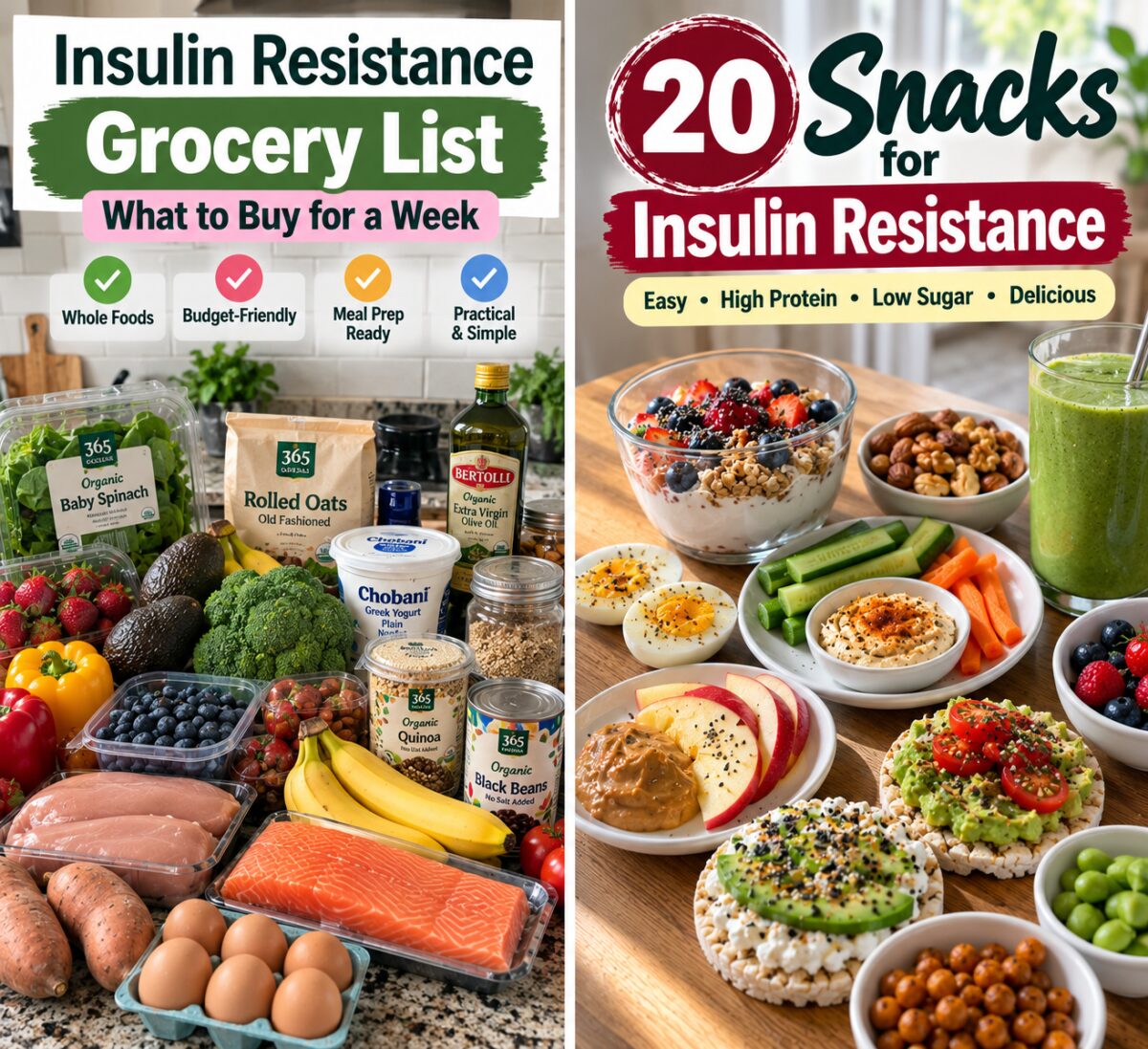
Insulin Resistance Grocery List: What to Buy
1. Vegetables
- Spinach, romaine, spring mix, or other leafy greens
- Broccoli, cauliflower, and Brussels sprouts
- Bell peppers, cucumbers, and zucchini
- Carrots, celery, and green beans
- Tomatoes, mushrooms, and onions
- Frozen mixed vegetables for quick meals
Shopping tip: Fresh, frozen, and no-salt-added canned vegetables can all be useful. Choose options that fit your budget and how often you cook.
2. Whole Fruit
- Apples and pears
- Blueberries, strawberries, and raspberries, fresh or frozen
- Oranges or mandarins
- Peaches or plums when in season
- Bananas for oatmeal or smoothies
Whole fruit contains fiber and can fit into a balanced eating pattern. Frozen fruit without added sugar is convenient for smoothies, oatmeal, and yogurt.
3. Protein Foods
- Eggs
- Plain Greek yogurt and cottage cheese
- Chicken or turkey
- Salmon, canned tuna, or other fish
- Tofu and edamame
- Unsweetened milk or soy milk
- Plain hummus
Mix and match animal and plant proteins. Compare packaged products for added sugar, sodium, and saturated fat where relevant.
4. Beans, Lentils, and Other Plant Proteins
- Black beans, chickpeas, kidney beans, and white beans
- Dry or canned lentils
- Split peas
- Edamame
Beans and lentils offer fiber as well as protein and can stretch meals across several servings. Canned beans are convenient; rinse them if you want to reduce some of the sodium.
5. Whole Grains and High-Fiber Carbohydrates
- Rolled oats
- Brown rice or wild rice
- Quinoa or barley
- Whole-wheat bread, wraps, and pasta
- Whole-grain crackers
- Sweet potatoes and regular potatoes
You do not need to eliminate carbohydrates. Choose higher-fiber options often, consider portions, and combine carbohydrate foods with protein and vegetables according to your needs.
6. Nuts, Seeds, and Healthy Fats
- Walnuts, almonds, or peanuts
- Natural peanut or almond butter
- Chia seeds and ground flaxseed
- Avocados
- Olive oil
Nuts, seeds, and oils are energy-dense, so portion them to suit your needs. Nut butter labels vary; choose one with little or no added sugar when possible.
7. Flavor Boosters and Pantry Basics
- Garlic, ginger, cinnamon, cumin, paprika, and black pepper
- Lemon and lime
- Vinegar and mustard
- Salsa and no-added-sugar tomato sauce
- Low-sodium broth
- Unsweetened cocoa powder
These ingredients help add flavor without relying on sweet sauces. Check labels on dressings, marinades, and jarred sauces for added sugar and sodium.
A Simple One-Week Grocery Checklist
Use this as a flexible checklist rather than a fixed prescription. Quantities depend on how many people you are feeding and which meals you plan to cook.
- Vegetables for lunches and dinners, including at least two frozen options
- Two or three types of whole fruit plus frozen berries
- Two or three protein choices, such as eggs, chicken, fish, tofu, or plain yogurt
- Beans or lentils for several meals
- One or two whole grains, such as oats and brown rice
- A small selection of nuts, seeds, and healthy fats
- Unsweetened drinks and simple flavorings
Budget-Friendly Grocery Tips
- Choose frozen berries and vegetables when fresh produce is expensive or spoils quickly.
- Buy dried lentils or low-sodium canned beans for affordable meals.
- Plan two meals that share ingredients, such as chicken, peppers, and brown rice.
- Use leftovers safely for lunch the next day.
- Compare unit prices and store brands rather than buying products marketed specifically for diabetes.
- Keep a short list of fast meals you can make from pantry staples.
Foods and Products You Do Not Need to Buy
You generally do not need special “blood sugar detox” drinks, expensive supplements, or products labeled “diabetic” to build balanced meals. Sugar-free labels do not automatically mean a product is nutritious, and “natural” sweeteners still add sugar. Choose foods based on their ingredients, taste, cost, and how they fit your overall eating pattern.
Turn This Grocery List Into Easy Meals
Combine these staples into meals such as oatmeal with berries and nuts, Greek yogurt with fruit and seeds, a chicken and vegetable bowl, lentil soup, tofu stir-fry, or salmon with broccoli and brown rice. For a ready-made weekly menu, use our 7-day insulin resistance meal plan. For dinner ideas, see 15 easy dinners for insulin resistance, and for quick options, browse 10 smoothies for insulin resistance.
Frequently Asked Questions
What is the best food to buy for insulin resistance?
There is no single best food. A useful shopping pattern includes vegetables, whole fruit, beans and lentils, whole grains, protein foods, and unsaturated fats. The best list is one you can afford and use consistently.
Should I stop buying bread, rice, or potatoes?
Not necessarily. These foods can fit into a balanced eating pattern. Higher-fiber choices, appropriate portions, and pairing carbohydrates with vegetables and protein can help make meals more balanced.
Are frozen vegetables and fruit okay?
Yes. Frozen produce is convenient and nutritious. Choose plain products without added sugar or heavy sauces when possible.
Do I need to follow this list exactly?
No. Swap foods to suit allergies, culture, preferences, budget, and availability. If you have diabetes, kidney disease, food allergies, or take glucose-lowering medicine, a registered dietitian or healthcare professional can help tailor your choices.
Final Thoughts
A useful insulin resistance grocery list is simple, flexible, and built around foods you actually enjoy. Start with a few dependable staples, plan meals before shopping, and make changes gradually rather than trying to overhaul everything at once.
This article is for general educational purposes only and is not a substitute for individualized medical advice, diagnosis, or treatment.