
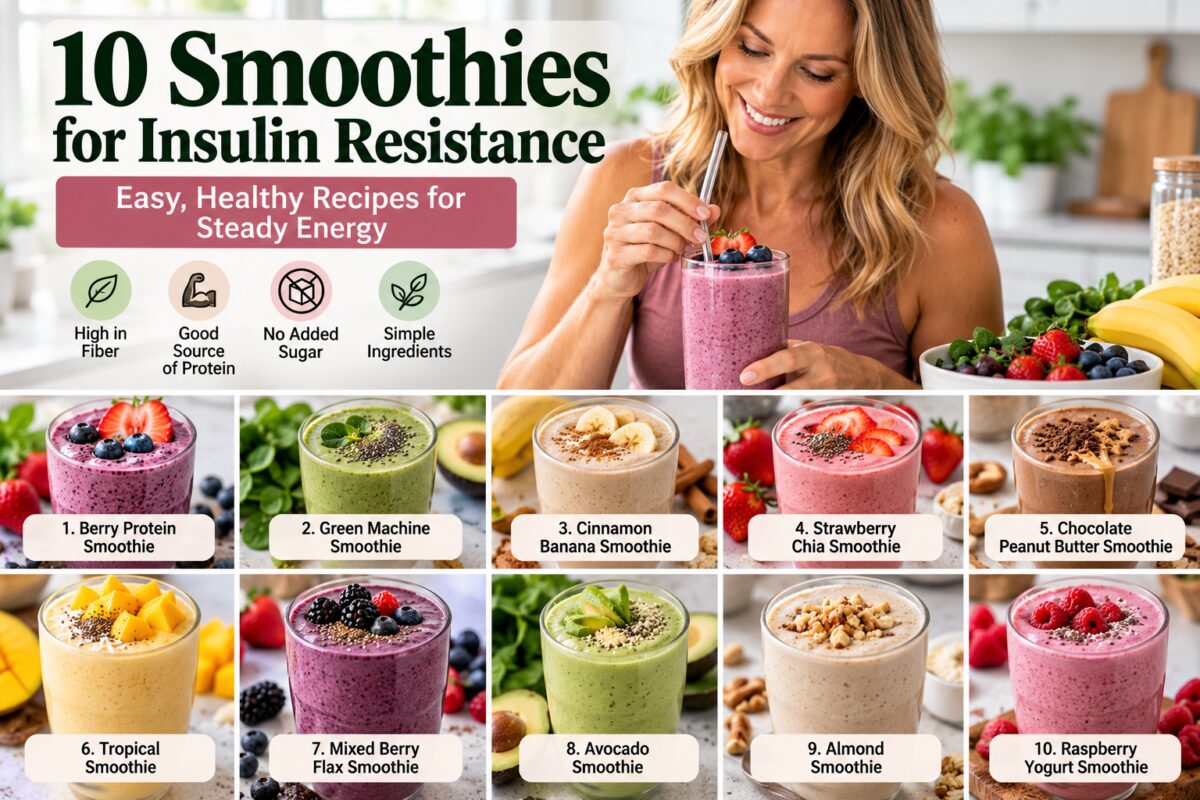
Smoothies can be a convenient breakfast or snack when you have insulin resistance, but ingredients matter. A drink made mostly from fruit juice, sweetened yogurt, or added syrups can deliver a lot of sugar without much fiber or protein. A more balanced smoothie combines whole fruit with a protein source, fiber-rich ingredients, and an unsweetened liquid.
These 10 smoothie recipes use familiar U.S. grocery-store ingredients such as berries, spinach, plain Greek yogurt, milk or unsweetened soy milk, nut butter, oats, and chia seeds. They are not treatments for insulin resistance, and individual blood glucose responses vary. Choose portions and ingredients that fit your needs.
How to Make a More Balanced Smoothie
- Use whole fruit: Frozen or fresh berries and small portions of other fruit add flavor and nutrients. Whole fruit blended into a smoothie retains its fiber, although drinking it may be less filling than eating whole fruit for some people.
- Add protein: Plain Greek yogurt, unsweetened soy milk, milk, or silken tofu can help make a smoothie more satisfying.
- Include fiber: Chia seeds, ground flaxseed, oats, or a handful of spinach can add fiber.
- Skip added sugar: Start with unsweetened liquids and plain yogurt. Taste before adding sweeteners.
- Watch the serving size: A large smoothie can contain several servings of fruit and more calories than expected. Pour a reasonable serving and pair it with a meal if needed.
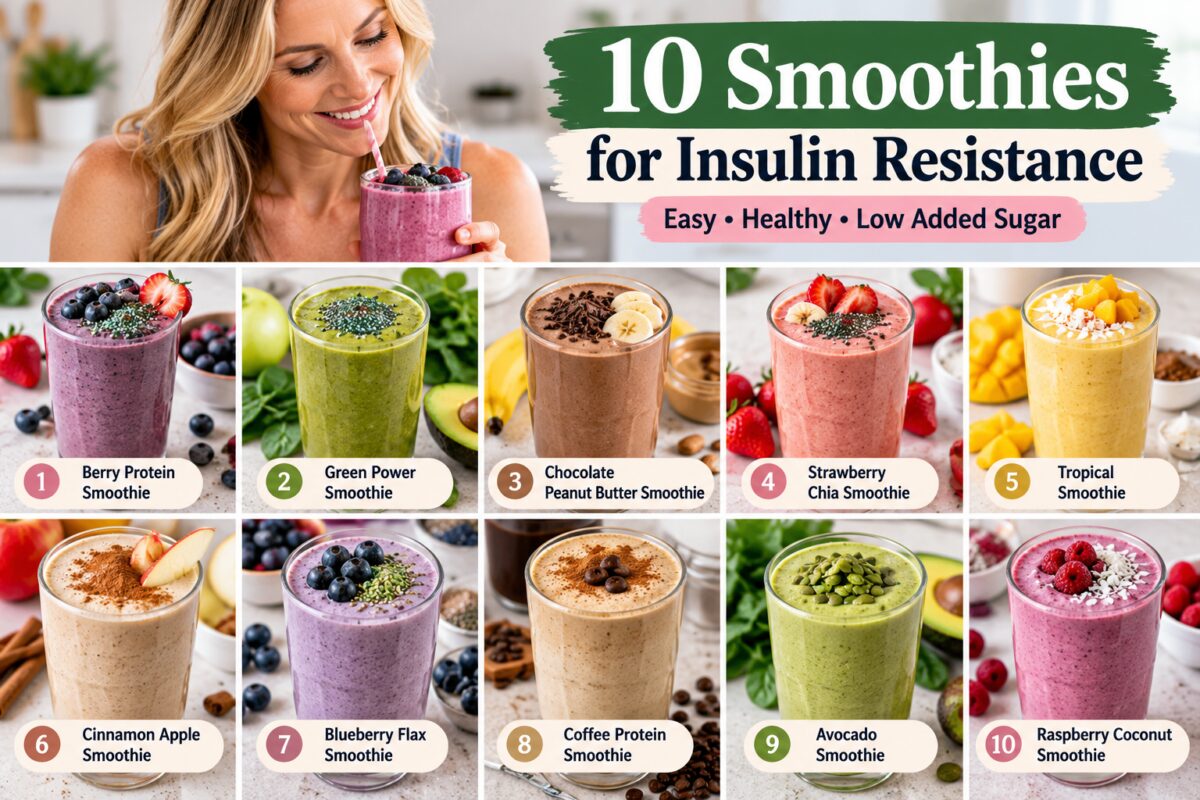
10 Smoothies for Insulin Resistance
Each recipe makes about one serving. Add a few ice cubes or a splash of unsweetened liquid to adjust the texture. Blend until smooth. Nutrition values vary by brand and portion, so check labels if you track carbohydrates or other nutrients.
1. Berry Greek Yogurt Smoothie
Ingredients
- ¾ cup plain Greek yogurt
- ½ cup frozen blueberries
- ½ cup frozen strawberries
- ¼ cup unsweetened milk or soy milk
- 1 tablespoon chia seeds
Directions: Blend all ingredients until creamy. Add more milk a tablespoon at a time if needed.
Why it works: Berries provide flavor and fiber, while Greek yogurt contributes protein. Choose plain yogurt rather than a sweetened fruit-flavored variety.
2. Green Spinach and Avocado Smoothie
Ingredients
- 1 cup fresh baby spinach
- ¼ avocado
- ½ small green apple
- ¾ cup unsweetened soy milk
- 1 tablespoon ground flaxseed
- Ice as needed
Directions: Blend until the spinach is fully broken down and the drink is smooth.
Why it works: Spinach and flaxseed add fiber, while avocado provides unsaturated fat. The apple adds sweetness without juice or syrup.
3. Cinnamon Peanut Butter Oat Smoothie
Ingredients
- ½ small banana
- ½ cup plain Greek yogurt
- 2 tablespoons rolled oats
- 1 tablespoon natural peanut butter
- ½ cup unsweetened milk
- ¼ teaspoon cinnamon
Directions: Blend until smooth. For a thicker texture, use a frozen banana slice or two.
Why it works: Oats add fiber, and yogurt and peanut butter contribute protein and fat. Using half a banana keeps the fruit portion moderate while still adding flavor.
4. Strawberry Chia Smoothie
Ingredients
- ¾ cup frozen strawberries
- ¾ cup plain Greek yogurt
- ½ cup unsweetened milk or soy milk
- 1 tablespoon chia seeds
- ½ teaspoon vanilla extract, optional
Directions: Blend until creamy. Let it sit for a few minutes if you prefer a thicker texture.
Why it works: Strawberries bring a bright flavor, and chia seeds contribute fiber. Plain yogurt makes the smoothie more filling than a fruit-and-juice blend.
5. Chocolate Peanut Butter Smoothie
Ingredients
- ¾ cup unsweetened soy milk or dairy milk
- ½ cup plain Greek yogurt
- 1 tablespoon natural peanut butter
- 1 teaspoon unsweetened cocoa powder
- ¼ small banana, optional
- Ice as needed
Directions: Blend until smooth. Add a little more cocoa for a richer chocolate flavor.
Why it works: Unsweetened cocoa gives chocolate flavor without syrup. Peanut butter and yogurt add richness and protein; check the peanut butter label for added sugar.
6. Mango Coconut Yogurt Smoothie
Ingredients
- ½ cup frozen mango
- ¾ cup plain Greek yogurt
- ½ cup unsweetened milk or soy milk
- 1 tablespoon ground flaxseed
- 1 tablespoon unsweetened shredded coconut, optional
Directions: Blend until creamy. Keep the mango portion as listed, and avoid adding fruit juice or sweetened coconut milk.
Why it works: Mango brings tropical flavor, while yogurt and flaxseed help balance the fruit. Coconut is optional and can be left out if you prefer less saturated fat.
7. Mixed Berry Flax Smoothie
Ingredients
- ¾ cup frozen mixed berries
- ¾ cup plain kefir or plain Greek yogurt thinned with water
- 1 tablespoon ground flaxseed
- ¼ cup water or unsweetened milk, as needed
Directions: Blend all ingredients. If using kefir, choose an unsweetened version.
Why it works: Mixed berries and flaxseed provide fiber, and plain kefir or yogurt adds protein. Dairy-free plain yogurt can be substituted, though protein content varies by product.
8. Cucumber Mint Green Smoothie
Ingredients
- ½ cup chopped cucumber
- 1 cup baby spinach
- ½ cup plain Greek yogurt
- ½ cup unsweetened soy milk
- 4–6 fresh mint leaves
- 1 tablespoon chia seeds
- A squeeze of lemon
Directions: Blend until smooth. Add cold water or ice to make it more refreshing.
Why it works: Cucumber, spinach, and mint make a fresh-tasting base, while yogurt and chia seeds add protein and fiber.
9. Almond Blueberry Breakfast Smoothie
Ingredients
- ½ cup frozen blueberries
- ¾ cup plain Greek yogurt
- ½ cup unsweetened almond milk
- 1 tablespoon almond butter
- 2 tablespoons rolled oats
- Pinch of cinnamon
Directions: Blend until smooth. Add a little water or almond milk if the mixture is too thick.
Why it works: Blueberries provide fruit flavor, while oats, yogurt, and almond butter make this a more substantial option than a juice-based smoothie. Almond milk is usually low in protein, so keep the yogurt or use another protein source.
10. Raspberry Tofu Smoothie
Ingredients
- ¾ cup frozen raspberries
- ½ cup soft silken tofu
- ½ cup unsweetened soy milk
- 1 tablespoon chia seeds
- ½ teaspoon vanilla extract, optional
Directions: Blend until silky and smooth. Add a little more soy milk if needed.
Why it works: Silken tofu and soy milk provide plant-based protein, while raspberries and chia seeds contribute fiber. This option is dairy-free and contains no added sugar when unsweetened products are used.
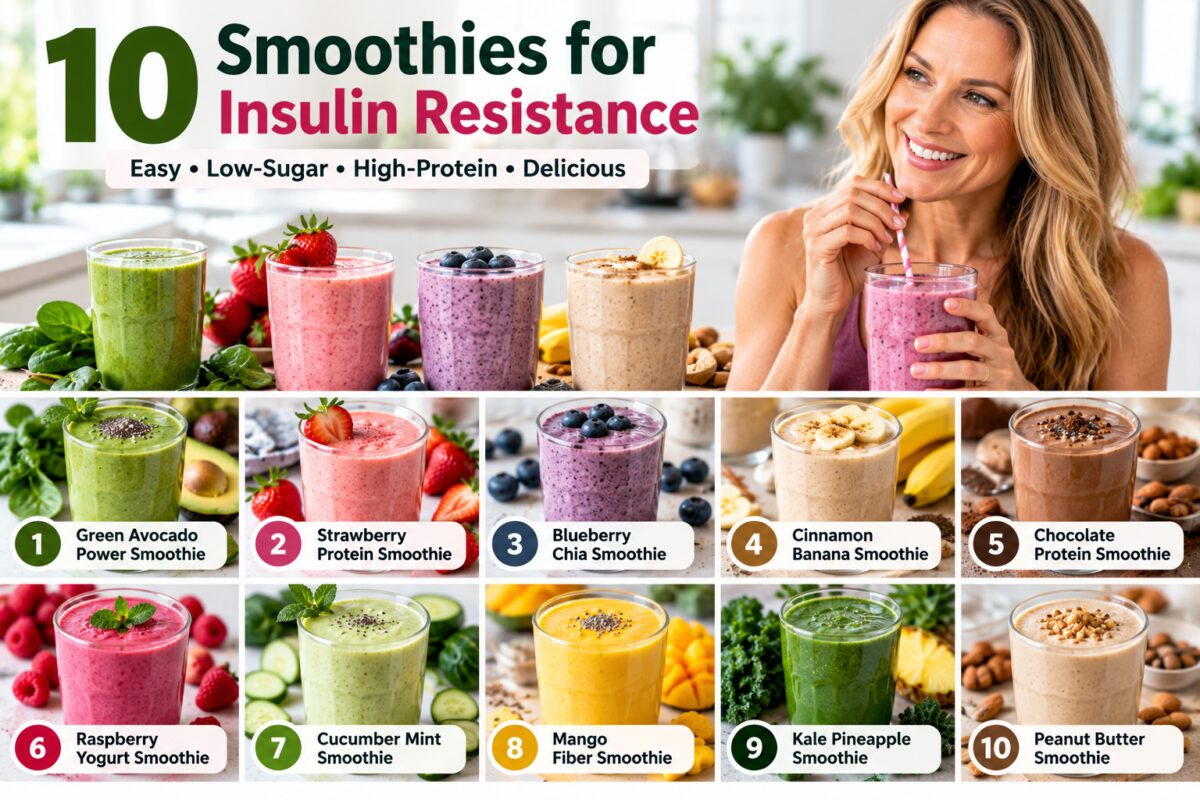
Ingredients to Keep on Hand
- Fruit: frozen blueberries, strawberries, raspberries, mixed berries, mango, and bananas.
- Protein: plain Greek yogurt, plain kefir, milk, unsweetened soy milk, and silken tofu.
- Fiber boosters: chia seeds, ground flaxseed, rolled oats, spinach, and avocado.
- Flavor: cinnamon, unsweetened cocoa, vanilla extract, mint, lemon, and natural nut butter with no added sugar.
Frozen fruit is often affordable and convenient. Buy plain, unsweetened versions when possible. You do not need a specialty powder or supplement to make these recipes.
Common Smoothie Mistakes to Avoid
- Using juice as the base: Juice can add concentrated sugars and less fiber than whole fruit. Try water, milk, or unsweetened soy milk instead.
- Adding multiple servings of fruit: Several bananas, dates, and large handfuls of other fruit can make a very large, carbohydrate-heavy drink. Start with the listed portions and adjust to your needs.
- Choosing sweetened yogurt: Flavored yogurt may contain added sugar. Plain yogurt lets you control the ingredients.
- Assuming “natural” means sugar-free: Honey, maple syrup, and agave still add sugar. Taste the smoothie before adding a sweetener.
- Drinking a smoothie without considering the rest of the meal: A smoothie may be a snack or part of breakfast depending on its size and ingredients. Think about your overall eating pattern.
Are Smoothies Good for Insulin Resistance?
They can fit into a balanced eating pattern, but there is no single smoothie that treats insulin resistance or guarantees a particular blood glucose response. Whole fruit blended with protein- and fiber-containing ingredients may be a more balanced option than a drink made mainly from juice and added sweeteners. Individual responses differ.
If you have diabetes or take medication that can cause low blood sugar, ask your healthcare professional how smoothies fit your carbohydrate and medication plan. A registered dietitian can help you tailor ingredients and portions to your preferences and health needs.
Frequently Asked Questions
Should I add protein powder to a smoothie?
Not necessarily. Plain Greek yogurt, milk, unsweetened soy milk, or silken tofu can add protein. If you choose protein powder, review the ingredient list and added-sugar content and ask a healthcare professional if you have questions about whether it is appropriate for you.
Can I use frozen fruit?
Yes. Frozen fruit works well and is often less expensive than fresh fruit out of season. Choose unsweetened fruit without syrup.
Are smoothies with bananas okay?
Bananas can fit into a balanced smoothie. Consider the portion and combine fruit with protein and fiber sources rather than adding several fruits and juice to one drink.
Do smoothies lower blood sugar?
No smoothie can be guaranteed to lower blood sugar. Ingredients, portion size, medication, activity, and individual physiology all matter. Monitor glucose as recommended by your healthcare professional if you have diabetes.
More Insulin Resistance Nutrition Ideas
Plan your shopping with this insulin resistance grocery list and find quick bites in our guide to 20 balanced snacks for insulin resistance.
For simple main meals, see our 15 easy dinners for insulin resistance.
For simple main meals, see our 15 easy dinners for insulin resistance.
For a full week of balanced meals, see our 7-day insulin resistance meal plan with grocery list. You can also explore high-protein meal ideas for insulin resistance, our guide to foods to avoid or limit, and these daily habits to improve insulin sensitivity.
Final Thoughts
These 10 smoothie recipes offer different ways to combine whole fruit, protein, and fiber without relying on added sugar. Start with the flavor you enjoy, use unsweetened ingredients, and keep portions suited to your needs. Smoothies are one convenient option—not a requirement—for balanced eating.
This article is for general educational purposes only and is not a substitute for individualized medical advice, diagnosis, or treatment.