
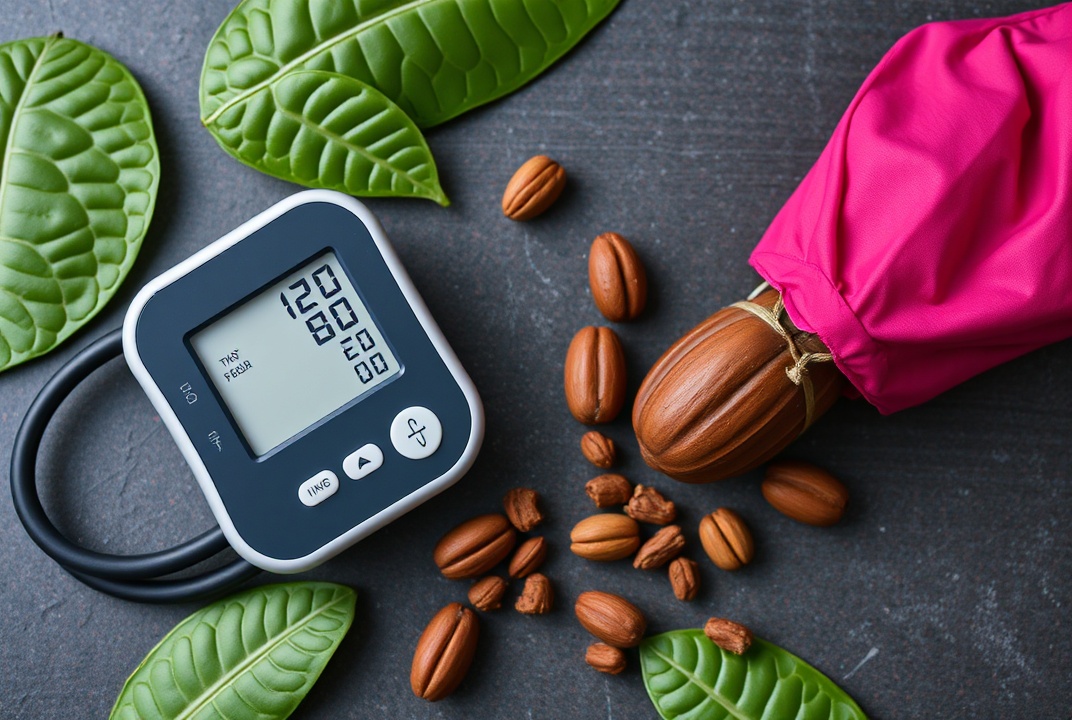
Theobroma cacao is the plant used to make cocoa and chocolate. Cocoa contains flavanols, a group of plant compounds studied for possible effects on blood-vessel function. Some research suggests cocoa flavanols may have a modest effect on blood pressure in certain settings, but the evidence varies by product and study. Cacao is not a treatment for hypertension and should not replace prescribed medication.
What research says about cacao and blood pressure
Cocoa flavanols have been studied for their potential effects on blood-vessel function and nitric-oxide pathways. Findings from controlled studies do not mean that all cocoa products provide the same effect or that eating chocolate will reliably lower an individual’s blood pressure. Processing can change flavanol content, and supplements or high-flavanol products may differ substantially from ordinary chocolate.
There is not enough evidence to recommend cacao as a stand-alone blood-pressure treatment. Do not use it to replace blood pressure monitoring, prescribed medicine, or follow-up with a healthcare professional.
Cocoa, cacao powder, and chocolate are not identical
Products differ in processing, flavanol content, sugar, fat, caffeine, and serving size. Dark chocolate can still be high in calories and may contain added sugar. Unsweetened cocoa or cacao powder can add flavor to oatmeal, yogurt, or smoothies without requiring a large chocolate portion, but it is not a guaranteed health treatment.
Ways to include cacao in meals
- Add a small amount of unsweetened cocoa powder to oatmeal or plain yogurt.
- Blend cocoa powder into a smoothie with milk or a fortified alternative and fruit.
- If you enjoy chocolate, choose a portion that fits your dietary needs and compare added sugar and serving sizes.
- Do not assume that a higher cacao percentage automatically means a proven blood-pressure benefit.
What matters more for blood pressure?
Evidence-based blood pressure management may include a balanced eating pattern, reducing excess sodium, regular physical activity, limiting alcohol, not smoking, adequate sleep, home monitoring when advised, and medication when prescribed. The best plan depends on your readings, other conditions, and overall cardiovascular risk.
Safety considerations
Cacao contains stimulant compounds such as caffeine and theobromine, which may affect sleep or cause symptoms in sensitive people. Chocolate can also trigger reflux or migraine for some. If you have a medical condition or take medication, ask your clinician or pharmacist about concentrated extracts or supplements. Do not change blood pressure medication based on claims about cacao.
Frequently asked questions
Can cacao dramatically lower blood pressure?
No. Cacao is not a quick fix, and it should not be relied on to control high blood pressure.
How much cacao should I take for blood pressure?
There is no established cacao dose for treating hypertension. Enjoy it as a food if you like it, rather than taking high-dose supplements for this purpose.
Can I eat chocolate while taking blood pressure medication?
Ordinary food portions may fit many diets, but individual advice depends on your health and medication. Ask a clinician or pharmacist before using concentrated cacao products or supplements.
For related food ideas, see our guide to cacao and heart health.
The takeaway
Cacao contains plant compounds that researchers continue to study, but products vary and the evidence does not establish cacao as a treatment for high blood pressure. Enjoy cocoa or chocolate in sensible portions if you wish, and rely on monitoring and evidence-based care to manage hypertension.