
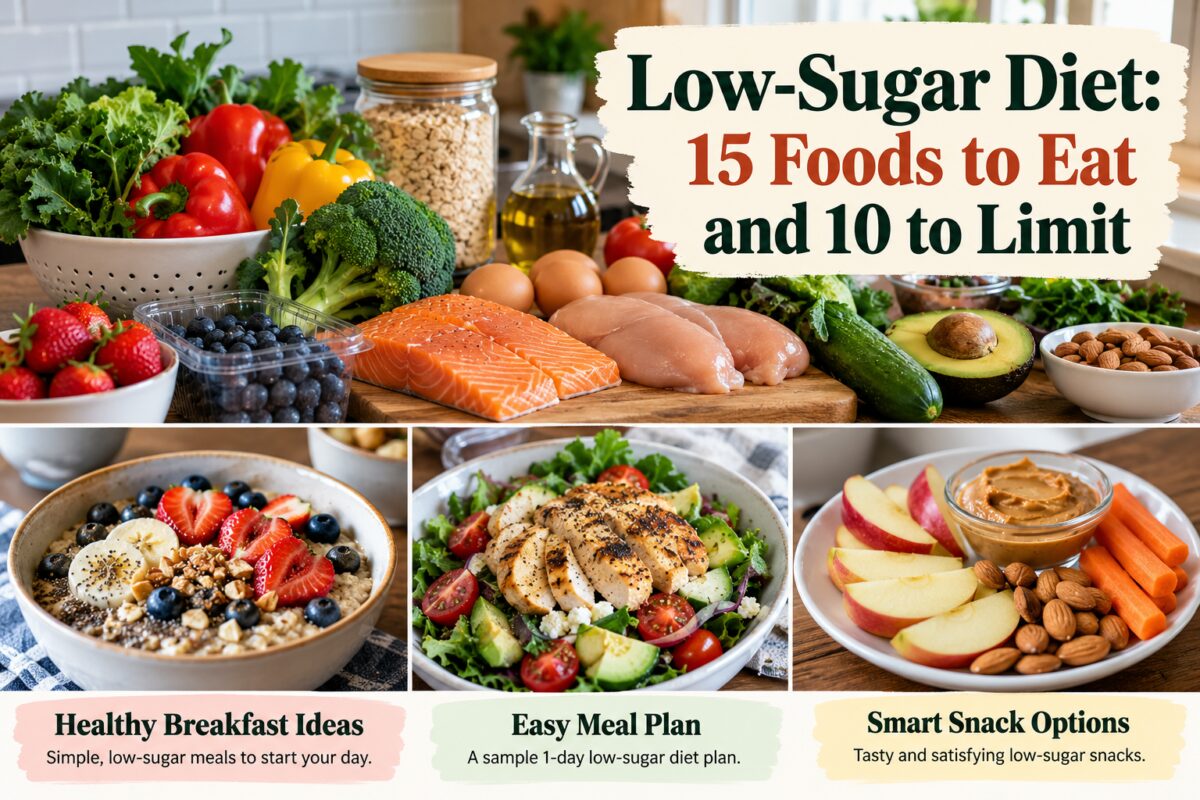
A low-sugar diet focuses on cutting back on added sugars while keeping nourishing foods such as whole fruit, vegetables, plain dairy, beans, and whole grains in your meals. You do not have to give up every sweet food or follow an extremely restrictive plan to make a meaningful change.
For many adults in the United States, the easiest starting point is to look at drinks, sweetened coffee, desserts, breakfast foods, sauces, and packaged snacks. This guide explains what to eat on a low-sugar diet, what to limit, how to read food labels, and how to build simple everyday meals.
What Is a Low-Sugar Diet?
A low-sugar diet is an eating pattern that limits added sugars, especially those in sugar-sweetened beverages and highly sweetened packaged foods. Added sugars are sugars or syrups added during food processing or preparation. They are different from the naturally occurring sugars in whole fruit and plain milk.
The U.S. Dietary Guidelines recommend limiting added sugars to less than 10% of daily calories for people ages 2 and older. The American Heart Association suggests lower daily limits for most adults. Individual needs differ, so focus on sustainable changes rather than aiming for perfection.
Important: A low-sugar diet does not mean a zero-carbohydrate diet. Whole fruit, unsweetened dairy, beans, and whole grains can still fit into a balanced eating pattern.
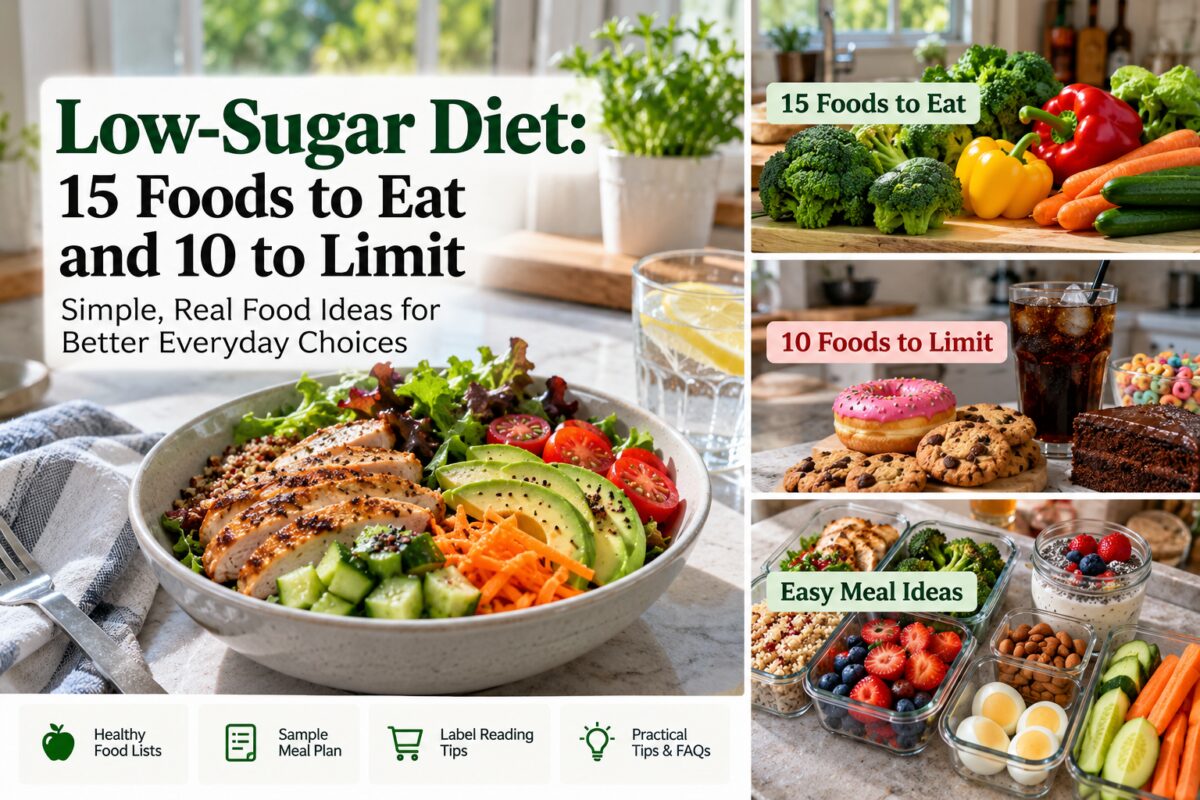
15 Foods to Eat on a Low-Sugar Diet
1. Fresh or Frozen Whole Fruit
Apples, oranges, pears, berries, peaches, and other whole fruits provide fiber, water, and important nutrients. Choose whole fruit more often than juice, which is easier to drink quickly and usually contains less fiber per serving.
Easy idea: Add berries to plain yogurt or pair an apple with peanut butter.
2. Nonstarchy Vegetables
Broccoli, spinach, peppers, carrots, cauliflower, green beans, cucumbers, and zucchini add color, fiber, and volume to meals. Fresh, frozen, and no-salt-added canned vegetables can all work.
Easy idea: Keep frozen vegetables ready for quick stir-fries, soups, and sheet-pan dinners.
3. Plain Greek Yogurt
Plain Greek yogurt supplies protein and calcium without the added sugar often found in flavored varieties. You can sweeten it naturally with fruit, cinnamon, or a small amount of vanilla extract.
Label tip: Plain yogurt still contains naturally occurring milk sugar, called lactose. Check the ingredient list and added-sugars line rather than assuming all total sugar is added sugar.
4. Eggs
Eggs are a versatile, naturally sugar-free source of protein. Pair them with vegetables, whole-grain toast, or beans for a satisfying breakfast or quick meal.
5. Fish and Seafood
Salmon, sardines, tuna, cod, shrimp, and other plain seafood contain little or no sugar. Choose simple preparations such as baking, grilling, or sautéing, and check sauces and glazes for added sugar.
6. Chicken and Turkey
Plain poultry is a useful protein option for lunches and dinners. Some marinades, barbecue sauces, breadings, and deli products contain added sugar, so compare labels when buying prepared options.
7. Beans and Lentils
Black beans, chickpeas, kidney beans, and lentils provide fiber and plant protein. They are convenient in soups, salads, grain bowls, and tacos.
Easy idea: Make a bean-and-vegetable bowl with brown rice, salsa, and avocado.
8. Nuts and Seeds
Almonds, walnuts, peanuts, chia seeds, pumpkin seeds, and ground flaxseed can add crunch, healthy fats, and some protein or fiber. Choose unsweetened varieties more often and portion them to suit your needs.
9. Natural Nut Butter
Peanut and almond butter can make fruit or whole-grain toast more filling. Look for options with little or no added sugar; ingredients and nutrition vary by brand.
10. Oats and Other Whole Grains
Plain rolled oats, steel-cut oats, barley, quinoa, brown rice, and whole-grain bread can provide fiber and fit into a low-added-sugar pattern. Avoid assuming a product is low in sugar just because it is labeled “whole grain”—flavored instant oatmeal and sweetened cereals may still contain added sugar.
11. Avocado and Olive Oil
Avocado and olive oil add unsaturated fats and flavor without needing sweet sauces. Use them in salads, grain bowls, sandwiches, and vegetable dishes.
12. Cottage Cheese
Plain cottage cheese provides protein and can be served with tomatoes and pepper or with fruit. Check the label because sodium levels and added ingredients vary by product.
13. Unsweetened Milk or Fortified Soy Milk
Plain milk and unsweetened fortified soy milk can be useful in oatmeal, smoothies, or alongside meals. Milk naturally contains lactose, while flavored milks may have additional added sugar.
14. Herbs, Spices, Citrus, and Vinegar
Cinnamon, ginger, garlic, chili, basil, lemon, lime, and vinegar can make meals flavorful without relying on sweet dressings or sauces. These ingredients are especially helpful when gradually reducing sweetness in everyday foods.
15. Water and Unsweetened Drinks
Water, sparkling water, unsweetened tea, and coffee without added sugar can replace sugar-sweetened beverages. If you prefer flavor, try citrus slices, mint, or berries in water.
10 Foods and Drinks to Limit on a Low-Sugar Diet
- Soda and sweetened soft drinks: choose water or sparkling water more often.
- Energy drinks and sweetened sports drinks: check whether you need the product for a specific activity, and compare sugar content.
- Sweet tea, lemonade, and sugary coffee drinks: gradually reduce syrup, sugar, or sweetened creamer.
- Candy and gummies: enjoy occasionally if you like them, rather than making them an everyday default.
- Cookies, cakes, and pastries: consider smaller portions or less frequent servings.
- Sweetened breakfast cereals and instant oatmeal: compare labels and try plain oats with fruit.
- Flavored yogurt and sweetened dairy alternatives: compare added sugars and choose plain versions when practical.
- Sweetened granola bars and packaged snacks: look for options with less added sugar and more fiber or protein.
- Syrups, honey, agave, and other sweeteners: these still count as added sugars when used to sweeten foods.
- Sweet sauces and condiments: barbecue sauce, ketchup, teriyaki sauce, and some salad dressings can add sugar in small servings.
You do not have to eliminate all of these foods forever. The goal is to reduce added sugar overall and choose foods that help you feel satisfied and meet your nutritional needs.
How to Read a Nutrition Facts Label
- Check serving size first. If you eat twice the listed serving, you get about twice the listed amounts.
- Look at “Includes Added Sugars.” This line helps distinguish added sugar from naturally occurring sugars.
- Compare similar products. Check cereals, yogurt, drinks, sauces, breads, and snack bars side by side.
- Read the ingredient list. Sugar may appear as cane sugar, syrup, honey, dextrose, or other sweetening ingredients.
- Remember the whole picture. Sugar is only one part of a food’s nutrition. Fiber, protein, sodium, saturated fat, cost, and your preferences also matter.

A Simple 1-Day Low-Sugar Meal Plan
This sample day is an idea, not a personalized calorie or medical plan. Adjust portions and foods to your appetite, culture, budget, and health needs.
- Breakfast: plain oatmeal topped with blueberries, chia seeds, and a spoonful of peanut butter.
- Lunch: chicken or chickpea salad with mixed greens, tomatoes, cucumbers, olive oil, and whole-grain toast.
- Snack: plain Greek yogurt with strawberries, or an apple with a small serving of nuts.
- Dinner: baked salmon or tofu with roasted broccoli and brown rice.
- Drinks: water, sparkling water, or unsweetened tea or coffee.
Practical Tips to Cut Back on Added Sugar
- Start with drinks. Replacing one regular soda or sweetened drink with an unsweetened option can be a manageable first step.
- Make breakfast less sweet. Try plain oats, eggs, or plain yogurt with fruit instead of relying on sweetened cereal or pastries every day.
- Adjust sweetness gradually. Use a little less sugar in coffee, tea, or recipes over time.
- Keep easy alternatives available. Stock fruit, nuts, plain yogurt, hummus, and vegetables for quick snacks.
- Plan for treats rather than banning them. A flexible approach can be easier to maintain than strict rules.
- Cook a few basics ahead. Make a batch of beans, whole grains, roasted vegetables, or protein to simplify meals.
Is a Low-Sugar Diet the Same as a Low-Carb Diet?
No. A low-sugar diet mainly focuses on reducing added sugars. A low-carbohydrate diet also limits some carbohydrate-rich foods, which may include grains, starchy vegetables, beans, and fruit depending on the plan. You can reduce added sugar while still eating whole fruit, oats, beans, and whole grains.
Is Fruit Allowed on a Low-Sugar Diet?
Yes. Most people do not need to avoid whole fruit simply because it contains naturally occurring sugar. Whole fruit provides fiber and nutrients. Juice, fruit drinks, and fruit packed in syrup are different choices, so check labels and choose whole fruit more often.
Frequently Asked Questions
How much added sugar should I eat per day?
The U.S. Dietary Guidelines recommend keeping added sugars below 10% of daily calories for people ages 2 and older. Your personal needs may differ. If you have a medical condition that affects your diet, ask a qualified healthcare professional or registered dietitian for individual advice.
Are honey and maple syrup better than white sugar?
Honey, maple syrup, agave, and table sugar all contribute added sugars when used to sweeten foods. They have different flavors, but none needs to be treated as a sugar-free alternative.
Can a low-sugar diet help with blood sugar management?
Reducing sugary drinks and frequently eaten foods high in added sugar can be one part of a balanced eating pattern. Blood glucose responses vary, and diet alone should not replace prescribed treatment or professional guidance.
Do I need to buy special low-sugar products?
No. Everyday foods such as vegetables, whole fruit, plain yogurt, eggs, beans, nuts, oats, and unsweetened drinks can form the basis of a low-added-sugar eating pattern. Packaged “low sugar” claims do not automatically make a product the best choice.
Related Reading
For more practical food ideas, see our insulin resistance grocery list, 20 balanced snack ideas, and 7-day meal plan.
Final Thoughts
A low-sugar diet is less about chasing a perfect number and more about making everyday choices easier to sustain. Start with drinks and a few frequently eaten packaged foods, read labels, and build meals around foods you enjoy. Whole fruit and other nourishing carbohydrate foods can still have a place in your routine.
This article is for general educational purposes only and is not a substitute for individualized medical advice, diagnosis, or treatment.