
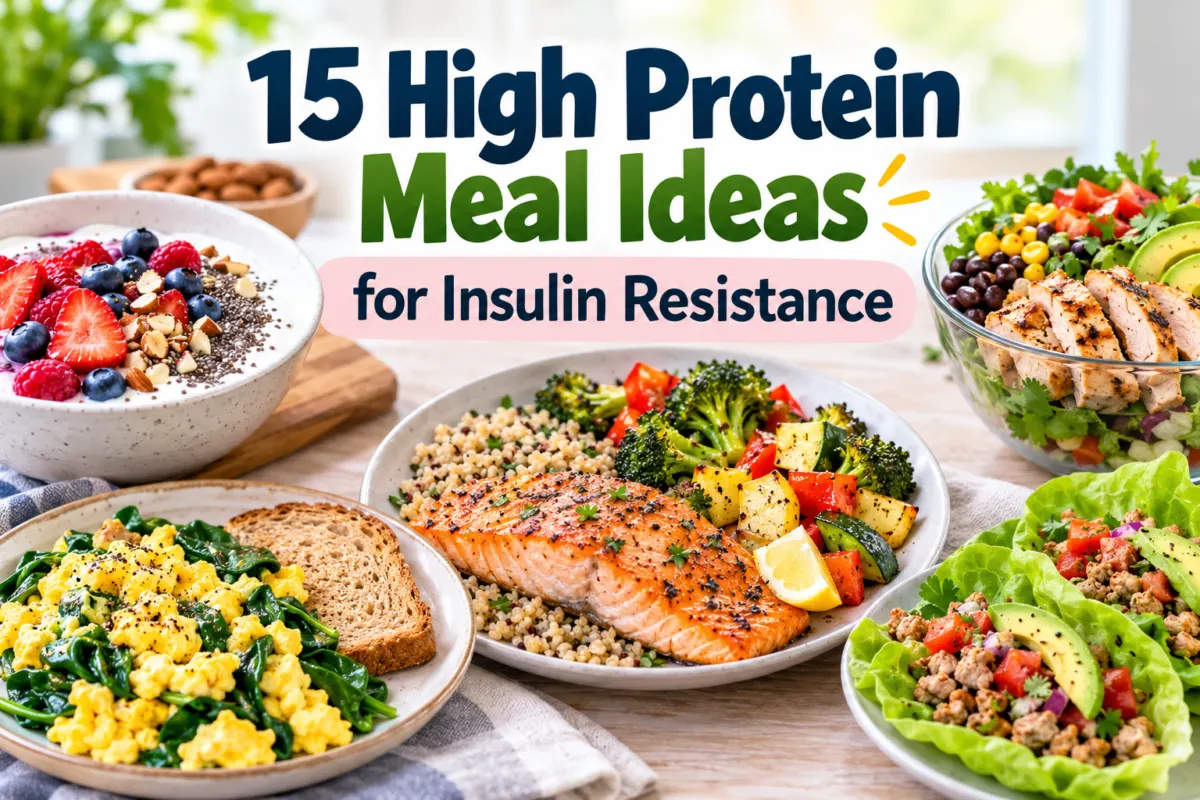
If you have insulin resistance, eating more protein at meals can help you feel full, support your muscles, and make balanced eating easier. The best high-protein meals also include fiber-rich vegetables, healthy fats, and sensible portions of carbohydrates.
You do not need to give up rice, bread, potatoes, or fruit. Instead, focus on the types of carbohydrates you eat, your portion sizes, and what you pair them with.
This guide shares 15 high-protein meal ideas for insulin resistance, including quick breakfasts, easy lunches, satisfying dinners, and snacks. You will find simple ingredients, estimated protein amounts, and practical tips for making each meal at home.
If you are still learning about this condition, read our guide to 15 possible signs of insulin resistance, including skin changes and blood sugar clues. Symptoms alone cannot confirm insulin resistance, so discuss concerns and testing with a healthcare professional.
Quick Answer: What Are the Best High-Protein Meals for Insulin Resistance?
Some of the best choices include eggs with vegetables, Greek yogurt with chia seeds, grilled chicken with broccoli, salmon with quinoa, tofu stir-fry, lentil soup, and cottage cheese with fresh vegetables.
Aim to include a protein source at each main meal. Pair it with non-starchy vegetables and a moderate serving of high-fiber carbohydrates, such as beans, oats, or whole grains.
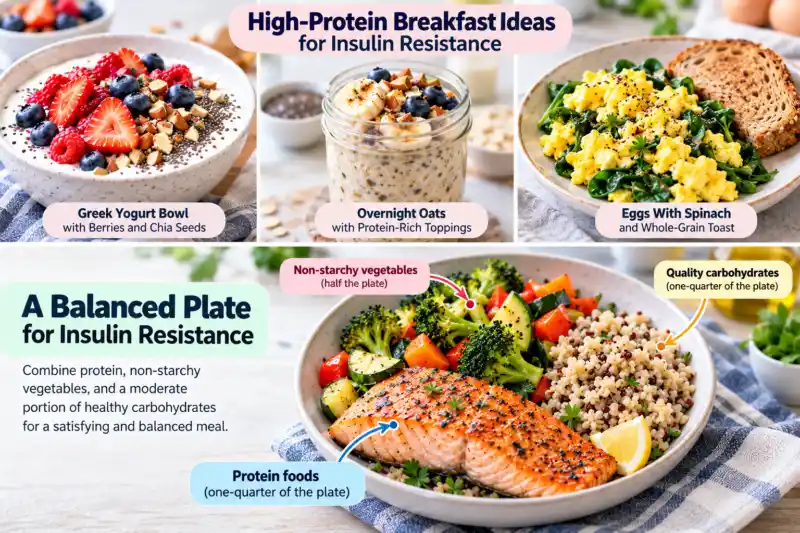
The American Diabetes Association recommends a balanced plate with half non-starchy vegetables, one-quarter protein foods, and one-quarter quality carbohydrate foods. Your exact needs may differ based on your health, activity level, and treatment plan.
1. Greek Yogurt Bowl With Berries and Chia Seeds
Estimated protein: 20–25 grams per serving
This creamy breakfast is a great choice when you want something quick, filling, and easy to prepare. Greek yogurt contains more protein than many regular yogurts. Berries add fiber, while chia seeds provide fiber and healthy fats.
Ingredients
- 1 cup plain, unsweetened Greek yogurt
- ½ cup fresh or frozen berries
- 1 tablespoon chia seeds
- 1 tablespoon chopped almonds
- A pinch of cinnamon, if desired
How to make it
- Add the yogurt to a bowl.
- Top with berries, chia seeds, and almonds.
- Sprinkle with cinnamon and enjoy.
Why it works: Protein and fiber help make this breakfast more satisfying. Choosing plain yogurt also helps you avoid the added sugar found in many flavored varieties.
Easy tip: Check the nutrition label because protein amounts vary by brand. If you are watching your carbohydrate intake, measure toppings such as granola and dried fruit.
2. Scrambled Eggs With Spinach and Whole-Grain Toast
Estimated protein: 18–23 grams per serving
Eggs provide high-quality protein and are easy to cook in minutes. Adding spinach and whole-grain toast creates a more balanced breakfast.
Ingredients
- 2 large eggs
- 1 cup fresh spinach
- 1 slice whole-grain toast
- 1 teaspoon olive oil
- Black pepper and your favorite herbs
How to make it
- Heat the olive oil in a skillet.
- Add spinach and cook until wilted.
- Add the beaten eggs and scramble until fully cooked.
- Serve with whole-grain toast.
Why it works: Eggs supply protein, spinach adds nutrients, and whole-grain bread provides carbohydrates and fiber. You do not need to avoid bread completely when managing insulin resistance. Choose bread made primarily with whole grains, watch the serving size, and pair it with protein.
3. Cottage Cheese With Cucumber and Tomatoes
Estimated protein: 20–25 grams per serving
Cottage cheese is a convenient protein source for breakfast, lunch, or a light evening meal. This savory bowl works especially well when you do not feel like cooking.
Ingredients
- 1 cup cottage cheese
- ½ cup chopped cucumber
- ½ cup chopped tomatoes
- 1 tablespoon pumpkin seeds
- Black pepper and fresh herbs
How to make it
- Place the cottage cheese in a bowl.
- Add cucumber and tomatoes.
- Sprinkle pumpkin seeds and herbs on top.
Why it works: Cottage cheese provides protein, while vegetables add volume and nutrients. Pumpkin seeds contribute healthy fats and a little extra protein.
Easy tip: Choose a lower-sodium cottage cheese if you need to limit sodium. Serve with a small portion of whole-grain crackers if you want extra carbohydrates.
4. Overnight Oats With Protein-Rich Toppings
Estimated protein: 20–25 grams per serving
Oats contain soluble fiber, including beta-glucan, which can support healthy cholesterol levels and help with blood sugar management as part of an overall balanced diet. However, oats still contain carbohydrates. The goal is to build a balanced bowl rather than eat a large serving of oats with sugary toppings.
Ingredients
- ½ cup rolled oats
- ¾ cup plain Greek yogurt
- ½ cup unsweetened milk
- 1 tablespoon chia seeds
- ¼ cup berries
How to make it
- Combine the oats, yogurt, milk, and chia seeds in a jar.
- Stir well and refrigerate overnight.
- Add berries before serving.
Why it works: Oats provide fiber, while Greek yogurt and milk increase the protein content. The combination is more balanced than a bowl of oats sweetened with syrup or brown sugar.
Easy tip: For a dairy-free version, use unsweetened fortified soy milk and a high-protein soy yogurt. Check labels because protein levels vary widely among plant-based products.
5. Grilled Chicken Breast With Broccoli and Quinoa
Estimated protein: 35–45 grams per serving
This is a simple lunch or dinner for people who want a high-protein meal with vegetables and a satisfying carbohydrate source.
Ingredients
- 4 ounces cooked skinless chicken breast
- ½ cup cooked quinoa
- 1–2 cups broccoli
- 1 teaspoon olive oil
- Garlic, paprika, lemon juice, and black pepper
How to make it
- Season the chicken with garlic, paprika, lemon, and pepper.
- Grill or pan-cook until the chicken reaches a safe internal temperature of 165°F.
- Steam the broccoli.
- Serve with cooked quinoa and a small drizzle of olive oil.
Why it works: Chicken provides lean protein, broccoli supplies fiber, and quinoa adds carbohydrates along with some protein and fiber.
Easy tip: Replace quinoa with a measured serving of brown rice, beans, or another whole grain you enjoy.
6. Salmon With Roasted Vegetables
Estimated protein: 25–35 grams per serving
Salmon is rich in protein and provides omega-3 fats. These fats support heart health, which matters because insulin resistance often occurs alongside other cardiometabolic risk factors.
Ingredients
- 4–5 ounces salmon
- 1 cup broccoli
- 1 cup zucchini or cauliflower
- 1 teaspoon olive oil
- Lemon juice, garlic, and black pepper
How to make it
- Heat the oven to 400°F.
- Season the salmon and vegetables with lemon, garlic, pepper, and olive oil.
- Place everything on a baking sheet.
- Roast until the salmon reaches 145°F at its thickest part and flakes easily.
Why it works: Salmon supplies protein and unsaturated fats, while the vegetables provide fiber and volume. For a more filling meal, add a modest serving of beans, quinoa, or a baked sweet potato.
7. Turkey and Avocado Lettuce Wraps
Estimated protein: 25–35 grams per serving
These wraps are a good option when you want a lower-carbohydrate lunch without relying on a traditional sandwich.
Ingredients
- 4 ounces cooked lean ground turkey
- Large lettuce leaves
- ¼ avocado
- Sliced tomatoes and diced onions
- Salsa without added sugar
How to make it
- Cook the turkey with your preferred spices.
- Spoon the turkey into clean lettuce leaves.
- Add avocado, tomatoes, onions, and salsa.
- Fold the leaves and serve.
Why it works: Turkey provides protein, and avocado adds unsaturated fat. Lettuce and tomatoes contribute nutrients with relatively few carbohydrates.
Easy tip: If you need more energy, serve the wraps with black beans or a small whole-grain tortilla. Choose fresh turkey or lower-sodium products when possible.
8. Tofu and Vegetable Stir-Fry
Estimated protein: 18–25 grams per serving
Plant-based meals can be excellent choices for insulin resistance. Tofu is a useful source of soy protein and works well with colorful vegetables.
Ingredients
- 6 ounces firm tofu
- 1 cup broccoli
- ½ cup bell peppers
- ½ cup mushrooms
- 1 teaspoon olive or canola oil
- Garlic, ginger, and reduced-sodium soy sauce
How to make it
- Press the tofu to remove excess water and cut it into cubes.
- Heat the oil in a skillet.
- Cook the tofu until lightly browned.
- Add the vegetables, garlic, ginger, and a little soy sauce.
- Stir-fry until the vegetables are tender but still slightly crisp.
Why it works: Tofu provides protein, and the vegetables contribute fiber and nutrients. The meal also offers an easy way to eat more plant-based foods.
Easy tip: Serve with a measured portion of brown rice or edamame. Check the tofu package for its protein content because products vary.
9. Lentil Soup With a Side of Greek Yogurt
Estimated protein: 20–28 grams per serving
Lentils are a budget-friendly source of plant protein, fiber, iron, and other nutrients. Although lentils contain carbohydrates, their fiber and protein make them a useful part of many balanced meal plans.
Ingredients
- ¾ cup cooked lentils
- ½ cup diced tomatoes
- ½ cup carrots and celery
- ¼ cup chopped onions
- Garlic, cumin, and vegetable broth
- ½ cup plain Greek yogurt for serving
How to make it
- Sauté the onions, carrots, celery, and garlic in a little oil.
- Add lentils, tomatoes, broth, and cumin.
- Simmer until the vegetables are tender.
- Serve with a spoonful of Greek yogurt.
Why it works: Lentils supply both protein and fiber, while Greek yogurt adds more protein without requiring meat.
Easy tip: Use low-sodium broth and skip cream-based additions if you want to keep saturated fat lower.
10. Black Bean and Chicken Salad
Estimated protein: 30–40 grams per serving
This colorful salad combines lean protein with beans, vegetables, and a simple dressing. It is a practical meal-prep option because you can cook the chicken ahead of time and assemble the salad in minutes.
Ingredients
- 3 ounces cooked chicken breast
- ½ cup black beans
- 2 cups romaine lettuce
- ½ cup chopped tomatoes
- ¼ cup corn
- Lime juice and 1 teaspoon olive oil
How to make it
- Place the lettuce, tomatoes, beans, and corn in a bowl.
- Add sliced cooked chicken.
- Dress with lime juice and olive oil.
- Toss and serve.
Why it works: Chicken and beans provide protein, while beans and vegetables contribute fiber. The mix can make the meal more satisfying than a salad made mostly of lettuce.
Easy tip: Rinse canned beans to remove some of the added sodium. If you use a packaged dressing, check its added sugar and sodium content.
11. Shrimp With Garlic, Zucchini, and Brown Rice
Estimated protein: 25–35 grams per serving
Shrimp cooks quickly, making this a useful weeknight dinner when you have little time.
Ingredients
- 5 ounces peeled shrimp
- 1–2 cups zucchini and bell peppers
- ½ cup cooked brown rice
- 1 teaspoon olive oil
- Garlic, lemon juice, and black pepper
How to make it
- Heat the oil in a skillet.
- Add garlic and shrimp, then cook until the shrimp turn opaque and reach 145°F.
- Add the vegetables and cook until tender.
- Finish with lemon juice and serve over brown rice.
Why it works: Shrimp provides lean protein, vegetables contribute fiber, and brown rice supplies carbohydrates in a measured portion.
Easy tip: Frozen shrimp can save time and money. Look for plain shrimp rather than products coated in breading or sugary sauces.
12. Egg and Black Bean Breakfast Tacos
Estimated protein: 18–25 grams per serving
Who says tacos are only for dinner? These breakfast tacos combine eggs and beans for a filling start to the day.
Ingredients
- 2 eggs
- ½ cup black beans
- 2 small corn tortillas
- Chopped tomatoes and spinach
- Salsa and black pepper
How to make it
- Scramble the eggs with spinach.
- Warm the beans and tortillas.
- Divide the eggs and beans between the tortillas.
- Add tomatoes and salsa.
Why it works: Eggs and beans provide protein, and the beans also contribute fiber. Corn tortillas supply carbohydrates, but their portion is easy to manage.
Easy tip: Add sliced avocado if you want more healthy fats. Check the tortillas’ serving size and nutrition label to understand their carbohydrate content.
13. Edamame and Hummus Snack Plate
Estimated protein: 15–20 grams per serving
A snack can be more than a handful of crackers or a sweet bar. This combination gives you protein, fiber, and a mix of textures.
Ingredients
- 1 cup shelled edamame
- 2 tablespoons hummus
- Sliced cucumber
- Bell pepper strips
How to make it
- Cook the edamame according to the package directions.
- Place it on a plate with hummus.
- Add cucumber and bell pepper strips for dipping.
Why it works: Edamame is a protein-rich soy food that also contains fiber. Hummus adds some protein and unsaturated fat, while the raw vegetables provide crunch.
Easy tip: Choose unsalted or lightly salted edamame if you need to watch sodium. Frozen edamame is convenient and easy to keep on hand.
14. Cottage Cheese and Berry Snack Bowl
Estimated protein: 15–25 grams per serving
If you want something sweet without relying on candy or cookies, try cottage cheese with berries.
Ingredients
- ¾–1 cup cottage cheese
- ½ cup strawberries or blueberries
- 1 tablespoon chopped walnuts
- Cinnamon, if desired
How to make it
- Spoon the cottage cheese into a bowl.
- Add the berries and walnuts.
- Sprinkle with cinnamon.
Why it works: Cottage cheese provides protein, berries contribute fiber, and walnuts add unsaturated fats.
Easy tip: Choose plain cottage cheese rather than a sweetened product. Whole fruit is generally a better choice than fruit juice because it retains its fiber.
15. Chicken and Vegetable Soup
Estimated protein: 25–35 grams per serving
Soup can be a convenient way to combine lean protein, vegetables, and carbohydrates in one bowl. This recipe is especially useful for meal prep because it can be made in a large batch.
Ingredients
- 4 ounces cooked chicken breast
- 1 cup chopped carrots, celery, and zucchini
- ½ cup cooked white beans
- 2 cups low-sodium chicken broth
- Garlic, thyme, and black pepper
How to make it
- Add the broth, vegetables, garlic, and thyme to a pot.
- Simmer until the vegetables are tender.
- Add the chicken and white beans.
- Heat thoroughly and season with black pepper.
Why it works: Chicken and beans provide protein, while beans and vegetables add fiber. A broth-based soup can also be a convenient way to include vegetables without using heavy cream.
Easy tip: Refrigerate leftovers promptly and use them within three to four days, or freeze portions for later meals.
How Much Protein Should You Eat With Insulin Resistance?
There is no single protein target that works for everyone with insulin resistance. Your needs depend on your body size, age, activity level, overall diet, and medical history.
For many adults, the general protein recommendation is about 0.8 grams per kilogram of body weight per day. Some people may need more, especially if they are older, physically active, or trying to maintain muscle during weight loss. Higher amounts are not automatically better.
For example, a 180-pound adult weighs about 82 kilograms. At 0.8 grams per kilogram, the general baseline is roughly 66 grams of protein per day.
That number is a starting reference, not a personalized prescription. People with kidney disease or other conditions may need a different protein intake. Ask your healthcare professional or registered dietitian for guidance if you have a medical condition that affects protein needs.
Should You Eat Protein at Every Meal?
Including a protein source at breakfast, lunch, and dinner is a practical way to spread protein intake throughout the day.
You do not need to force yourself to eat a large amount at every meal. Choose portions that fit your needs, and include a variety of protein sources over the week.
- Eggs
- Chicken and turkey
- Fish and seafood
- Plain Greek yogurt
- Cottage cheese
- Tofu and edamame
- Beans, lentils, and chickpeas
- Nuts and seeds
Protein helps build and maintain muscle, and protein-rich foods can help you feel satisfied after eating. However, protein alone does not eliminate blood sugar rises or cure insulin resistance.
How to Build a Balanced Meal for Insulin Resistance
A simple plate method can help you put these meal ideas into practice without counting every gram of carbohydrate.
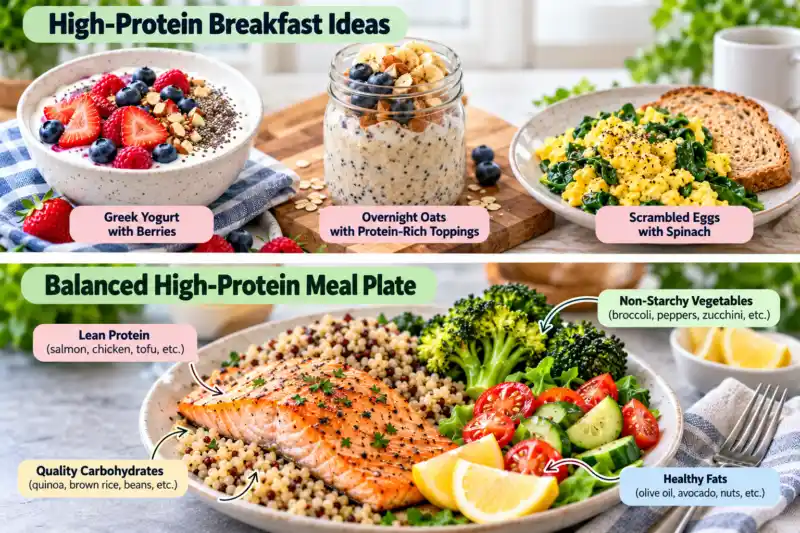
- Half the plate: Non-starchy vegetables such as broccoli, spinach, lettuce, cauliflower, peppers, and zucchini.
- One-quarter of the plate: Protein foods such as chicken, fish, eggs, tofu, or another protein that fits your diet.
- One-quarter of the plate: Quality carbohydrates such as beans, brown rice, quinoa, sweet potato, or whole grains.
Add a small amount of unsaturated fat, such as olive oil, avocado, nuts, or seeds, when appropriate.
This is a starting framework, not a strict rule. Portion sizes and carbohydrate needs may differ for people who take glucose-lowering medicines or have other health concerns.
Why Do Protein and Fiber Work Well Together?
Protein and fiber have different roles in a meal. Protein supports muscle maintenance and helps you feel satisfied. Fiber slows digestion, supports bowel health, and can help with blood sugar management.
When you eat carbohydrates with protein, fat, or fiber, glucose may enter the bloodstream more slowly than when you eat the same carbohydrates alone. The exact effect depends on the foods, portions, and individual response.
For example, an apple with peanut butter is a more balanced snack than apple juice alone. Likewise, beans with vegetables and chicken can provide a more complete meal than a large serving of refined grains by themselves.
Remember that adding protein does not cancel out the carbohydrates in a meal. Portion size and the total meal still matter.
Foods to Limit or Choose Less Often
You do not need a list of forbidden foods to manage insulin resistance. Start by making a few practical swaps.
| Choose more often | Have less often |
|---|---|
| Plain Greek yogurt | Sweetened yogurt with lots of added sugar |
| Whole fruit | Fruit juice and sugary fruit drinks |
| Oats and whole grains | Sugary cereals and refined-grain pastries |
| Beans and lentils | Highly processed snack foods |
| Grilled or baked chicken | Breaded, deep-fried chicken |
| Water or unsweetened drinks | Regular soda and sweetened beverages |
| Nuts and seeds in sensible portions | Large portions of sugary or salty snack mixes |
The goal is to build an eating pattern that you can maintain. A single meal does not determine your health, and you do not need to remove every carbohydrate from your diet.
A Simple One-Day High-Protein Meal Plan
Here is one way to combine the ideas above into a day of balanced meals.
| Meal | Food idea |
|---|---|
| Breakfast | Greek yogurt with berries, chia seeds, and almonds |
| Lunch | Grilled chicken, broccoli, and quinoa |
| Afternoon snack | Cottage cheese with cucumber and tomatoes |
| Dinner | Salmon with roasted vegetables and a small serving of brown rice |
Adjust the portions to your appetite, energy needs, and personal carbohydrate goals. You can also swap chicken and fish for tofu, eggs, lentils, or other protein foods.
This is an example, not a prescribed calorie or protein plan. If you use insulin or certain diabetes medications, discuss meal timing and carbohydrate changes with your healthcare team because changes may affect your risk of low blood sugar.
Frequently Asked Questions
Is a high-protein diet good for insulin resistance?
Including protein-rich foods in balanced meals can help with fullness and muscle maintenance. Protein can also help you build meals around vegetables and high-fiber carbohydrates. However, a very high-protein diet is not necessary for everyone, and the best eating pattern depends on your health and personal needs.
What is the best breakfast for insulin resistance?
Good options include eggs with spinach, plain Greek yogurt with berries and chia seeds, cottage cheese with vegetables, or overnight oats made with Greek yogurt. Choose a meal that combines protein with fiber and a suitable portion of carbohydrates.
Can I eat rice if I have insulin resistance?
Yes. Rice contains carbohydrates, but you do not necessarily need to avoid it. Consider a moderate serving alongside protein and non-starchy vegetables. Brown rice has more fiber than white rice, although portion size and your individual glucose response still matter.
Are beans and lentils good for insulin resistance?
Beans and lentils provide plant protein, fiber, vitamins, and minerals. They also contain carbohydrates, so portions may need to fit your overall meal plan. Their fiber content makes them useful choices for many people.
Should I stop eating fruit if I have insulin resistance?
No. Whole fruit can provide fiber, vitamins, and minerals. Choose whole fruit more often than juice, and consider pairing fruit with yogurt, nuts, or another protein-rich food if that works well for you.
Can protein reverse insulin resistance?
No single food or nutrient can guarantee that insulin resistance will reverse. Healthy eating, regular physical activity, adequate sleep, and weight management when appropriate can help improve insulin sensitivity. Some people also need medication or other medical care.
Is whey protein safe for insulin resistance?
Whey protein may be a convenient way to increase protein intake, but it is not required. Choose a product with little or no added sugar if you use one, and check the full ingredient and nutrition labels. People with kidney disease, milk allergies, or other relevant health concerns should seek individualized advice before adding supplements.
What is the best snack for insulin resistance?
Useful options include edamame, plain Greek yogurt, cottage cheese, nuts in sensible portions, hummus with vegetables, or an apple with peanut butter. Choose a snack based on hunger, your meal plan, and your individual health needs.
Want to know which foods are worth limiting while building balanced meals? See our guide to 15 foods to avoid or limit for insulin resistance.
For more morning meal inspiration, explore 13 easy low-glycemic breakfasts for insulin resistance, including oatmeal, Greek yogurt, eggs, tofu, and cottage cheese bowls.
For more breakfast inspiration, see 13 easy low-glycemic breakfasts for insulin resistance with balanced, everyday American breakfast ideas.
Final Thoughts
The best high-protein meal ideas for insulin resistance are the ones that combine protein with vegetables, fiber-rich carbohydrates, and healthy fats in portions that fit your needs.
Start with two or three meals you enjoy rather than trying to change everything at once. Keep easy protein sources in your fridge or pantry, prepare vegetables ahead of time, and make small changes you can sustain.
For more personalized guidance, especially if you have prediabetes, diabetes, kidney disease, or take glucose-lowering medication, work with your healthcare professional or a registered dietitian.
Medical note: This article is for general education and is not a substitute for personal medical advice.