
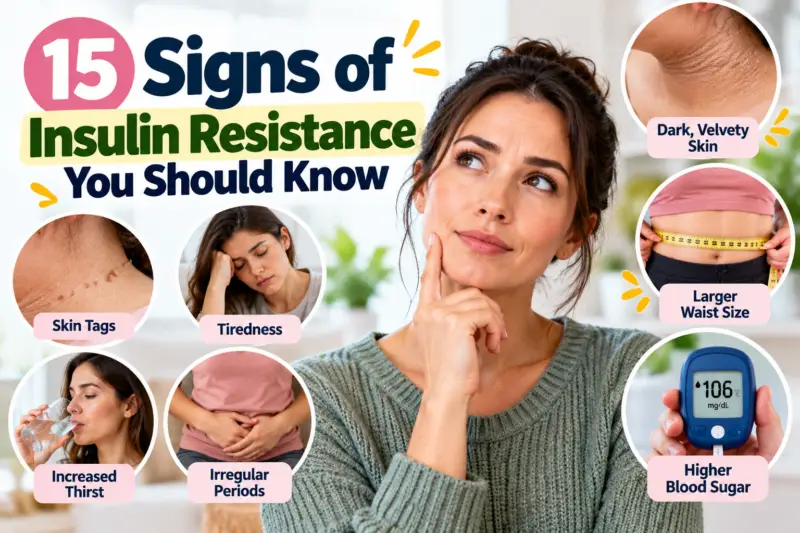
Insulin resistance can develop without obvious warning signs. Some people feel completely normal, while others notice changes in their skin, waist size, energy, or blood sugar levels.
Insulin is a hormone made by the pancreas. It helps move glucose (sugar) from your blood into your cells for energy. When your body becomes less responsive to insulin, your pancreas may make more insulin to keep blood sugar in a healthy range. Over time, this process can contribute to prediabetes and type 2 diabetes.
The most important thing to know is that insulin resistance cannot be confirmed by symptoms alone. Dark, velvety skin patches, certain hormone-related changes, and abnormal blood sugar results can be clues, but blood tests and a medical evaluation help determine what is happening.
In this guide, you will learn about 15 possible signs of insulin resistance, what they may mean, which tests doctors use, and what you can do if you think you may be at risk.
Quick Answer: What Are the Common Signs of Insulin Resistance?
Insulin resistance often has no noticeable symptoms. When signs are present, they may include:
- Dark, velvety skin around the neck or armpits
- Skin tags, especially around skin folds
- A larger waist circumference
- Elevated blood sugar or prediabetes
- High triglycerides or low HDL cholesterol
- High blood pressure
- Irregular menstrual periods or signs of PCOS
- Increased thirst or frequent urination when blood sugar becomes high
These signs do not prove that someone has insulin resistance. Many can occur for other reasons, and some people with insulin resistance have none of them.
1. Dark, Velvety Skin Around the Neck
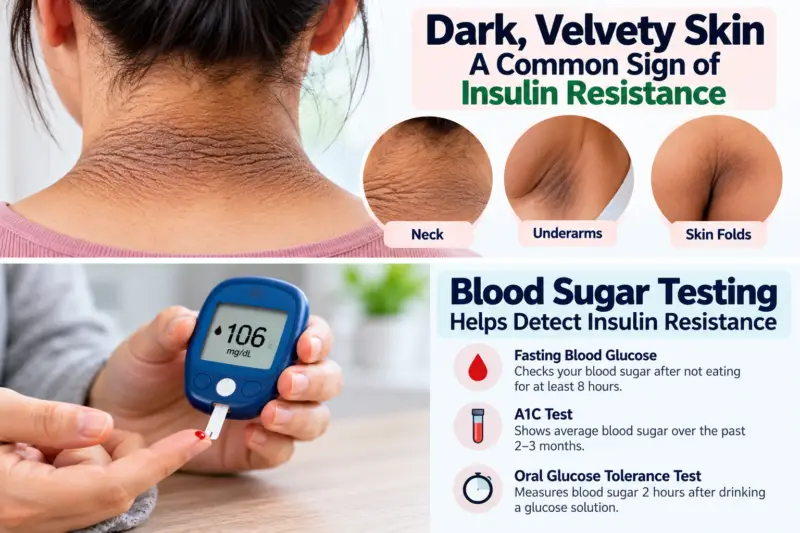
One of the more recognizable skin signs associated with insulin resistance is a condition called acanthosis nigricans.
It can cause areas of skin to become darker, thicker, and velvety. These patches often appear around the back of the neck, under the arms, or in the groin.
The skin may look dirty even when it is clean, but scrubbing will not remove the change because it is not caused by poor hygiene.
Why it matters: Acanthosis nigricans can be associated with high insulin levels and insulin resistance. However, it can also occur with other medical conditions or certain medicines.
What to do: Ask a healthcare professional to examine new or unexplained dark patches, particularly if you also have risk factors for prediabetes.
2. Skin Tags Around the Neck or Armpits
Skin tags are small, soft growths that often develop where skin rubs against skin or clothing.
They commonly appear on the neck, underarms, eyelids, and other skin folds. Some research has linked multiple skin tags with insulin resistance and metabolic conditions.
However, skin tags are common and can occur in people who do not have insulin resistance.
What to look for: Several new skin tags appearing alongside other risk factors may be a reason to discuss blood sugar screening with your doctor.
Do not try to cut off skin tags at home. A healthcare professional can confirm what they are and discuss safe removal if needed.
3. A Larger Waist Circumference
Carrying more fat around the abdomen is associated with a higher risk of insulin resistance.
Fat stored around internal organs, known as visceral fat, is especially relevant to metabolic health. This type of fat can release substances that affect inflammation and how the body responds to insulin.
Still, waist size is a risk marker, not a diagnosis. People with a smaller waist can also develop insulin resistance.
What you can do: Focus on sustainable habits such as regular walking, strength training, balanced meals, and adequate sleep. If weight loss is appropriate for you, even modest changes may improve metabolic health.
Waist measurements should be interpreted in the context of your sex, ethnicity, overall health, and other risk factors.
4. Blood Sugar Levels Above the Normal Range
Elevated blood sugar is one of the most useful clues that your body may not be handling glucose normally.
In early insulin resistance, the pancreas may release extra insulin to help keep glucose within the normal range. As the condition progresses, blood sugar may begin to rise.
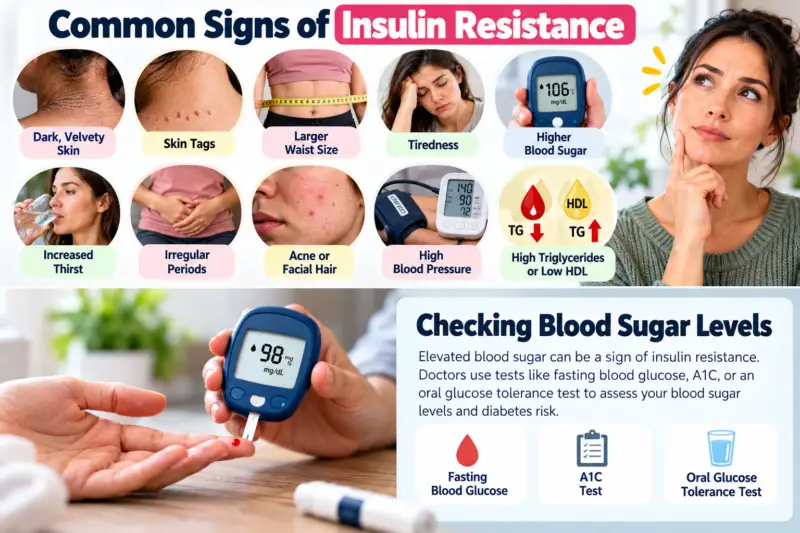
Doctors often use these tests to assess blood sugar and diabetes risk:
| Test | Normal range | Prediabetes range | Diabetes range |
|---|---|---|---|
| A1C | Below 5.7% | 5.7%–6.4% | 6.5% or higher |
| Fasting blood glucose | Below 100 mg/dL | 100–125 mg/dL | 126 mg/dL or higher |
| 2-hour oral glucose tolerance test | Below 140 mg/dL | 140–199 mg/dL | 200 mg/dL or higher |
These are standard diagnostic thresholds for nonpregnant adults. Diabetes usually requires confirmation with repeat testing unless the person has clear symptoms and a qualifying result. Individual circumstances can affect which tests are appropriate.
Important: Normal blood sugar does not rule out early insulin resistance. Your body may still be producing enough insulin to keep glucose within the normal range.
5. Feeling Thirsty More Often Than Usual
Increased thirst can occur when blood sugar becomes high enough to cause the kidneys to remove extra glucose through urine.
As the body loses more water, you may feel unusually thirsty.
However, thirst alone is not a reliable sign of insulin resistance. It can also result from hot weather, exercise, dehydration, certain medicines, or other medical conditions.
When to pay attention: Persistent, unexplained thirst deserves medical attention, especially if you also urinate frequently, feel weak, or experience blurred vision.
Sudden severe thirst with vomiting, confusion, difficulty breathing, or marked weakness requires urgent medical assessment.
6. Frequent Urination
Frequent urination can be another sign of high blood sugar.
When glucose levels become sufficiently elevated, the kidneys may release extra glucose into the urine. Water follows the glucose, increasing urine production.
This can mean going to the bathroom more often during the day or waking up several times at night.
Frequent urination is not specific to insulin resistance. Urinary tract infections, bladder conditions, pregnancy, prostate problems, and other causes can produce similar symptoms.
What to do: If frequent urination is new or persistent, ask a healthcare professional whether blood sugar testing or another evaluation is needed.
7. Feeling Tired or Low on Energy
Ongoing fatigue is often reported by people with metabolic conditions, but it is not a specific sign of insulin resistance.
Insulin helps the body use and store energy. Changes in glucose regulation may occur alongside sleep problems, excess weight, or other health issues that contribute to tiredness.
Fatigue can also result from anemia, thyroid disorders, depression, medication effects, and poor sleep.
A practical next step: If tiredness continues despite adequate rest, discuss it with your doctor rather than assuming insulin resistance is the cause.
A medical evaluation can help identify the right explanation and prevent you from overlooking another treatable condition.
8. Increased Hunger or Cravings
Some people with insulin resistance report feeling hungry soon after meals or having frequent cravings for sweet foods.
However, cravings are not a reliable way to identify insulin resistance. Hunger is affected by sleep, stress, meal size, eating habits, activity, and many other factors.
Eating patterns that provide protein, fiber, and healthy fats may help you feel satisfied for longer.
For example, try plain Greek yogurt with berries, eggs with vegetables, or beans with whole grains instead of relying on sugary snacks alone.
If you experience intense hunger along with shakiness, sweating, dizziness, or confusion, especially when taking diabetes medication, seek medical guidance about possible low blood sugar.
9. High Blood Pressure
High blood pressure and insulin resistance often occur together as part of a broader group of metabolic risk factors.
Insulin resistance may be associated with changes in how the kidneys handle sodium, blood vessel function, and other processes that affect blood pressure.
But high blood pressure does not mean you necessarily have insulin resistance. Genetics, age, kidney conditions, medications, and lifestyle factors can also contribute.
What to do: Have your blood pressure checked regularly. If it is elevated, work with your healthcare professional on a plan that may include diet changes, physical activity, medication, or other steps.
Blood pressure management matters even if your blood sugar results are normal.
10. High Triglycerides or Low HDL Cholesterol
A routine cholesterol panel may reveal a pattern associated with insulin resistance.
This pattern can include:
- Higher triglyceride levels
- Lower HDL cholesterol, sometimes called “good” cholesterol
- Other changes in blood lipids
Insulin resistance can affect how the liver processes fats and how the body stores and releases them.
However, lipid levels are influenced by genetics, diet, alcohol use, thyroid function, medicines, and other health conditions.
Why it matters: High triglycerides and low HDL cholesterol can signal increased cardiometabolic risk, even when you feel well.
A clinician can interpret your results alongside blood pressure, blood sugar, family history, and other risk factors.
11. Irregular Menstrual Periods
Irregular menstrual cycles can sometimes be associated with insulin resistance, particularly in people with polycystic ovary syndrome (PCOS).
PCOS is a hormonal condition that can affect ovulation and may cause irregular periods, acne, increased facial or body hair, and difficulty becoming pregnant.
Insulin resistance is common in PCOS, but not everyone with PCOS has it, and not everyone with insulin resistance develops PCOS.
Other causes of irregular periods include pregnancy, thyroid disorders, stress, major weight changes, and perimenopause.
What to do: If your periods become irregular or stop unexpectedly, discuss the change with a healthcare professional. Do not assume insulin resistance is the only possible cause.
12. Acne or Increased Facial Hair
Persistent acne or increased facial and body hair can sometimes be linked to higher androgen levels.
Androgens are hormones that all people produce, although typical levels differ by sex. In some people, PCOS and related hormone changes can cause acne, facial hair growth, or thinning hair on the scalp.
Because PCOS is often associated with insulin resistance, these changes may prompt a broader hormonal and metabolic evaluation.
However, acne and unwanted hair growth have many possible causes and are not direct proof of insulin resistance.
If these changes occur alongside irregular periods or other symptoms, a healthcare professional can help determine whether testing for PCOS or another condition is appropriate.
13. Difficulty Losing Weight
Some people with insulin resistance also have overweight or obesity and find weight management challenging.
However, insulin resistance does not make weight loss impossible, and difficulty losing weight is not a diagnostic sign.
Appetite, sleep, stress, medications, genetics, activity levels, and the overall food environment all affect body weight.
What may help: Focus on repeatable habits rather than extreme diets. Meals that include protein, fiber-rich carbohydrates, vegetables, and unsaturated fats can help support fullness and overall nutrition.
Regular strength training and aerobic activity can also improve insulin sensitivity, sometimes even before a large change in body weight occurs.
14. Brain Fog or Trouble Concentrating
Some people describe brain fog, difficulty concentrating, or feeling mentally sluggish when they have metabolic health concerns.
These experiences are real, but they are not established diagnostic signs of insulin resistance.
Poor sleep, stress, anxiety, depression, medication effects, anemia, thyroid conditions, and other health problems can affect attention and memory.
Blood sugar fluctuations may contribute to symptoms in some situations, but you cannot determine the cause from brain fog alone.
What to do: If concentration problems persist, interfere with daily life, or appear suddenly, seek medical advice rather than relying on a diet change alone.
Sudden confusion, trouble speaking, or new weakness requires emergency care.
15. A Diagnosis of Prediabetes or Type 2 Diabetes
Prediabetes and type 2 diabetes are important signs that your body’s glucose regulation needs attention.
Insulin resistance is a major contributor to many cases of prediabetes and type 2 diabetes. Over time, the pancreas may struggle to produce enough insulin to keep blood sugar within the normal range.
Prediabetes often has no symptoms. Type 2 diabetes can also develop quietly, which is why screening matters for people at increased risk.
A diagnosis of prediabetes does not mean you will definitely develop type 2 diabetes. Lifestyle changes and, in some cases, medication can help reduce the risk of progression.
If your blood sugar tests fall in the diabetes range, follow up with your healthcare professional for confirmation and a treatment plan.
Who Is More Likely to Have Insulin Resistance?
Insulin resistance can affect people of different ages, body sizes, and backgrounds. Certain factors can increase the likelihood of developing it.
Common risk factors include:
- Overweight or obesity, particularly excess abdominal fat
- Limited physical activity
- A family history of type 2 diabetes
- A history of gestational diabetes
- Polycystic ovary syndrome (PCOS)
- Increasing age
- Obstructive sleep apnea
- Certain medicines or medical conditions
- A history of elevated blood sugar or abnormal cholesterol levels
Having one or more risk factors does not mean you definitely have insulin resistance. Risk is best assessed by looking at your full health history and appropriate laboratory tests.
How Do Doctors Test for Insulin Resistance?
There is no single routine blood test used to diagnose insulin resistance in every patient.
Healthcare professionals commonly assess related metabolic conditions using blood glucose tests, A1C, cholesterol testing, blood pressure, and a review of risk factors.
A1C test
The A1C test estimates average blood sugar over roughly the past three months. It helps identify prediabetes and diabetes, but it does not directly measure insulin resistance.
Certain conditions, including some forms of anemia and changes in red blood cells, can affect how accurately A1C reflects blood sugar.
Fasting blood glucose
This test measures blood sugar after you have not eaten for at least eight hours. It is commonly used to screen for prediabetes and diabetes.
A normal fasting glucose result does not necessarily rule out early insulin resistance.
Oral glucose tolerance test
For this test, you drink a glucose-containing liquid and have your blood sugar measured at set times. The two-hour result can help identify impaired glucose tolerance or diabetes.
This test may be useful when a clinician needs more information than a fasting glucose or A1C result provides.
Fasting insulin and HOMA-IR
Fasting insulin tests and calculations such as HOMA-IR are used in some clinical and research settings to estimate insulin resistance.
However, there is no universally accepted cutoff that works across all laboratories and populations. These tests are not routinely needed for everyone, and results should be interpreted by a qualified healthcare professional.
The key point: Do not diagnose yourself from skin changes, tiredness, weight, or online symptom lists. A proper assessment is more useful than guessing.
Along with understanding possible symptoms, everyday food choices can also support metabolic health. Explore these high-protein meal ideas for insulin resistance for practical breakfast, lunch, and dinner inspiration.
What Should You Do If You Notice Signs of Insulin Resistance?
If you notice possible signs or have several risk factors, consider these practical steps.
1. Schedule a medical checkup
Tell your healthcare professional about your symptoms, family history, medicines, and any previous blood sugar results. Ask whether screening for prediabetes or diabetes is appropriate.
2. Build balanced meals
Include protein foods, non-starchy vegetables, fiber-rich carbohydrates, and healthy fats. Beans, lentils, oats, whole grains, nuts, seeds, fish, eggs, and plain yogurt can all fit into a balanced eating pattern.
You do not need to eliminate all carbohydrates. Portion sizes and food choices can be adjusted to your individual needs.
3. Move your body regularly
Walking, cycling, swimming, and other aerobic activities help muscles use glucose. Strength training can also improve insulin sensitivity by building and maintaining muscle.
For many adults, a useful long-term goal is at least 150 minutes of moderate-intensity aerobic activity each week, along with muscle-strengthening activity on two or more days, as health and ability allow.
If you are currently inactive, start with a manageable amount and increase gradually.
4. Prioritize sleep
Most adults need at least seven hours of sleep per night, although individual needs vary.
Poor sleep can affect appetite, glucose regulation, and energy. If you snore loudly, wake up gasping, or feel very sleepy during the day, ask your healthcare professional whether sleep apnea should be assessed.
5. Avoid unproven supplements and extreme diets
No supplement or “insulin resistance detox” has been shown to reliably cure insulin resistance.
Some supplements can interact with medicines or cause side effects. If you are considering one, discuss it with your healthcare professional.
If you have diabetes and take insulin or certain glucose-lowering medicines, major changes in carbohydrate intake or meal timing may also require medical guidance to reduce the risk of low blood sugar.
When Should You Seek Medical Attention?
Arrange a medical appointment if you notice unexplained skin changes, persistent thirst, frequent urination, irregular periods, or other ongoing symptoms.
Seek prompt medical care if you develop symptoms that suggest very high blood sugar, particularly marked thirst, frequent urination, blurred vision, or unexplained weight loss.
Get emergency help for vomiting with severe weakness, difficulty breathing, confusion, or loss of consciousness. These symptoms can signal a serious medical problem and should not be attributed to insulin resistance without evaluation.
Frequently Asked Questions
Can you have insulin resistance without symptoms?
Yes. Many people with insulin resistance have no noticeable symptoms, especially in the early stages. Blood sugar may remain normal for some time because the pancreas produces extra insulin to compensate.
What is the first sign of insulin resistance?
There is no single first sign. Some people develop no visible signs at all. Acanthosis nigricans, or dark, velvety skin patches, is one recognized clue, but it does not occur in everyone and can have other causes.
Can a normal blood sugar test rule out insulin resistance?
No. Normal fasting glucose or A1C does not necessarily rule out early insulin resistance. These tests assess blood sugar, not insulin sensitivity directly. Your clinician may consider other risk factors and tests if needed.
Does insulin resistance always lead to diabetes?
No. Insulin resistance can remain stable or improve. Prediabetes and type 2 diabetes develop when glucose regulation becomes impaired, but progression is not inevitable. Appropriate lifestyle changes and medical care can help reduce risk.
Can insulin resistance cause weight gain around the stomach?
Insulin resistance and abdominal fat often occur together, but one cannot be assumed to cause the other in every person. Hormones, genetics, sleep, diet, activity, and other factors influence both metabolic health and fat distribution.
What foods are helpful for insulin resistance?
There is no single food that treats insulin resistance. A balanced eating pattern can include vegetables, beans, lentils, whole grains, nuts, seeds, fish, eggs, and other protein foods. Limiting sugary drinks and choosing high-fiber carbohydrates can also support metabolic health.
Can you reverse insulin resistance naturally?
Insulin sensitivity can improve with regular physical activity, balanced nutrition, adequate sleep, and weight management when appropriate. Some people may also benefit from medication. Results vary, and lifestyle changes should not replace prescribed treatment without medical advice.
Is insulin resistance the same as diabetes?
No. Insulin resistance means the body’s cells respond less effectively to insulin. Prediabetes means blood sugar is above the normal range but below the diabetes threshold. Type 2 diabetes develops when blood sugar reaches the diagnostic range. These conditions are related but not interchangeable.
Food choices can also be part of managing metabolic health. Read our guide to 15 foods to avoid or limit for insulin resistance for practical alternatives and balanced eating tips.
Balanced eating can be a useful part of metabolic health. Explore 13 easy low-glycemic breakfasts for insulin resistance for practical breakfast combinations.
Balanced eating can be part of supporting metabolic health. See 13 easy low-glycemic breakfasts for insulin resistance for practical meal combinations.
Final Thoughts
Insulin resistance can be difficult to spot because it often develops without clear symptoms. Dark skin patches, multiple skin tags, abdominal fat, abnormal cholesterol, and irregular periods can provide clues, but none of these signs confirms the condition by itself.
The most useful next step is to understand your personal risk and discuss appropriate testing with a healthcare professional. If you do have insulin resistance, regular movement, balanced meals, good sleep, and medical care can all help support better metabolic health.
You do not need to make every change at once. Start with one manageable habit, build consistency, and seek personalized guidance when you need it.
Medical disclaimer: This article is for general education only. It does not diagnose or treat insulin resistance. Consult a qualified healthcare professional for medical advice.
Trusted Resources
- National Institute of Diabetes and Digestive and Kidney Diseases: Insulin Resistance and Prediabetes
- Centers for Disease Control and Prevention: Prediabetes
- American Diabetes Association: Diabetes Diagnosis
- National Institute of Diabetes and Digestive and Kidney Diseases: Diabetes Tests and Diagnosis